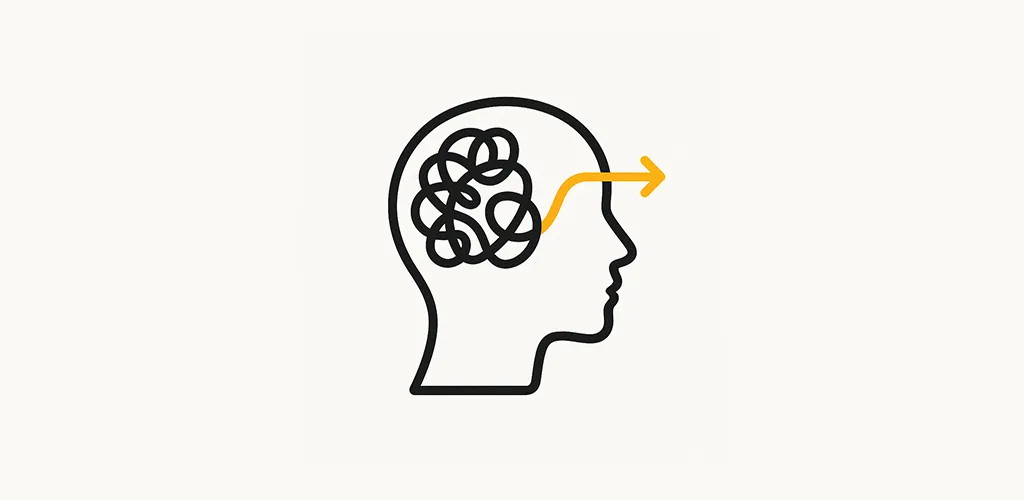
Why Your Morning Routine Keeps Failing (It's Not Discipline)
You've tried the 5am club, cold showers, and habit stacking. None of it stuck. The problem isn't willpower — it's how your brain produces dopamine.
You've tried the 5am club, cold showers, and habit stacking. None of it stuck. The problem isn't willpower — it's how your brain produces dopamine.
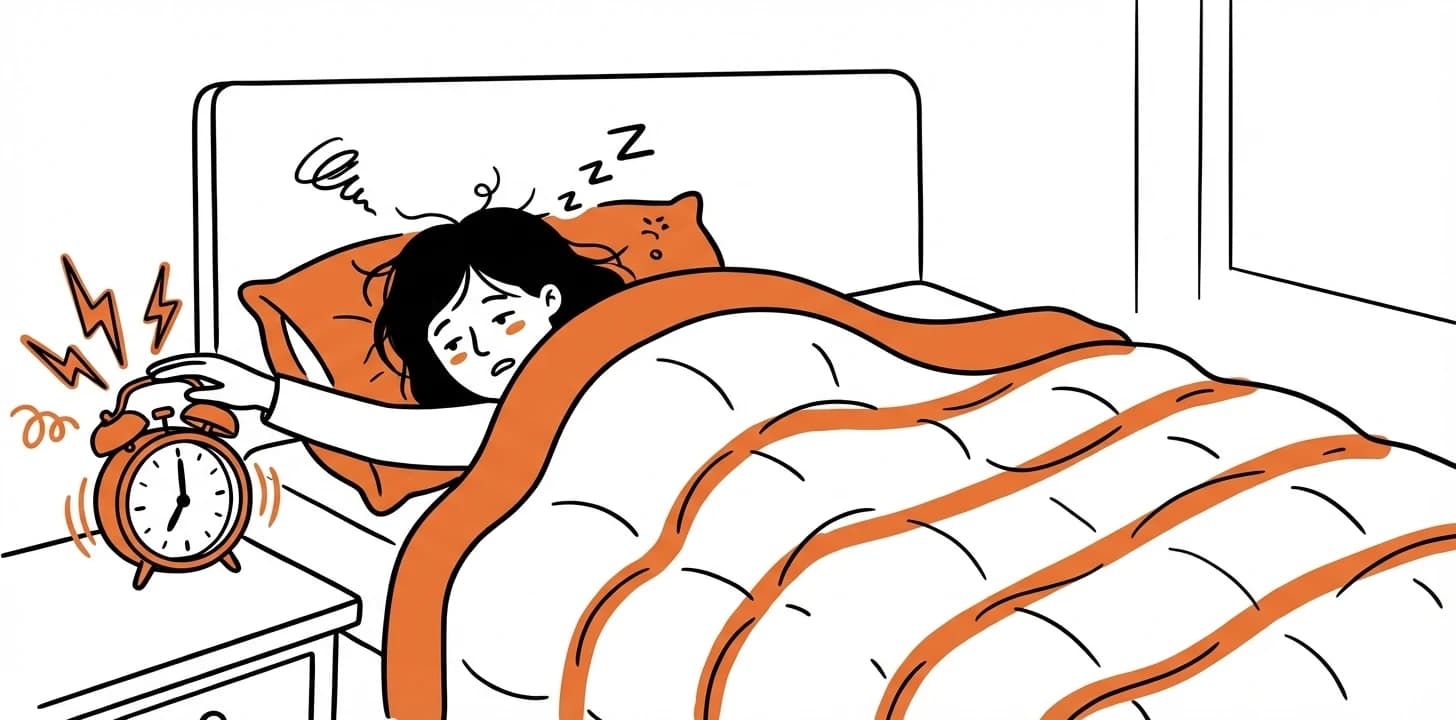
You've probably tried waking up at 5am. You set seven alarms, each two minutes apart, because you know you'll dismiss the first six. You do. You dismiss the seventh too. You wake up at 9:47 and feel like a failure before the day has even started.
You've probably tried the "don't touch your phone" rule. But the moment your eyes open, your hand is already reaching for the screen — your brain needs some kind of stimulation before it can boot up, and scrolling Instagram for 40 minutes is the only way it knows how to generate enough energy to get vertical. You know those 40 minutes could've been spent on something meaningful. You know that while you're scrolling. It doesn't help.
You've probably tried habit stacking. "After I brush my teeth, I will journal for 5 minutes." What actually happens: you brush your teeth, then stand in the bathroom staring at the wall for 15 minutes, completely blank, unsure what to do next despite having planned it the night before. It's a strange feeling — looking at yourself in the mirror, knowing you should walk to your desk and sit down, but your body feels like it belongs to someone else.
You've probably tried the classic "just start with one small thing." You know what you need to do. You can see the task. You can describe the task. You can explain to someone else how to do the task. But your body won't move. It's not that you don't want to — it's that you can't start.
Over the years, each failure adds another layer of proof: "See, I knew it. I just don't have it in me." I spent a long time believing that was the truth — that I was simply a person with zero self-discipline.
If any of this sounds like you, I want you to know something: there is nothing wrong with your willpower. These routines were designed for brains that work differently from yours. The advice isn't bad. It's just not meant for you.
It's not laziness. It's your brain's startup sequence.
Think of it like booting a computer.
Most people's brains are SSDs. Press the power button, and within seconds they're at the desktop, ready to work. Your brain is more like an old hard drive — it needs a longer startup sequence, loads things one at a time, and if something interrupts it mid-boot, it has to start over from scratch.
This metaphor is surprisingly accurate. It's close to what's actually happening in your neurochemistry.
Your executive system is offline. Your brain knows what to do — the plan is right there. But the part responsible for initiating action hasn't come online yet. It's like having a GPS that calculated the perfect route, except the car won't shift out of park — you're sitting in the driver's seat, frustrated, foot on the gas, and nothing happens. This disconnect between knowing exactly what to do and being unable to do it might be the most maddening part of the whole experience.
Your dopamine is running low. For most people, waking up comes with enough baseline dopamine to start moving through their morning. Your brain doesn't have that. So it goes hunting for stimulation — the phone, the snooze button, the rabbit hole. Your brain is trying to self-medicate, doing exactly what it's designed to do with the resources it has. You think you're being lazy. Your brain is actually working overtime just to get itself running.
Transitions are expensive. Switching from "sleep mode" to "action mode" isn't a single step for you — it's a ramp. A long, gradual ramp that most morning routines don't account for, because their creators never needed one.
This pattern has a name. It's called ADHD — Attention Deficit Hyperactivity Disorder. And you don't need a formal diagnosis to recognize that your brain works this way.
I'm not asking you to self-diagnose. I'm asking you to stop fighting your own hardware and start working with it.
Design your morning for your brain, not against it.
I'm not going to give you a minute-by-minute schedule. "7:00 wake up, 7:05 meditate, 7:15 journal" — for me, that kind of thing is just a recipe for another failed attempt.
What I'll give you instead are three principles. They work because they're built on how your brain actually operates, not how productivity influencers think it should.
Principle 1: Lower the activation energy to near zero.
Of course you want to do the thing. But the gap between "lying in bed" and "doing the thing" is a canyon, and every morning you're expected to leap across it.
Stop trying to jump. Build a bridge instead.
The night before, reduce your first morning action to something that requires zero decisions. Lay your clothes on the chair. Pre-set the coffee machine. Open the document you need to work on and leave it on your screen. The key is that your first action should not require thinking — decisions burn dopamine, and dopamine is exactly what you don't have at 7am. If your first move requires you to choose what to wear, decide what to eat, or figure out what to work on, you've already burned through whatever fuel you had before you even got started.
"Sit up" counts as a win. Start there.
Principle 2: Bribe your brain — on purpose.
Your brain needs dopamine to start moving. So give it some.
Not the junk dopamine of doom-scrolling — that's like eating candy for breakfast, a spike then a crash. Instead, pair your startup sequence with a quality reward: a coffee you genuinely love, a playlist that makes you feel something, a podcast episode you've been saving.
The trick is bundling. "I listen to my favorite podcast while getting dressed." Your brain gets the stimulation it's craving, your body starts moving, and by the time the episode hooks you, you're already up, dressed, and halfway through your coffee — you didn't even notice the moment you "woke up."
This is dopamine-driven productivity. The craving for stimulation, looked at from a different angle, is actually your engine. You just need to give it the right fuel.
Principle 3: Don't plan your morning. Let something else plan it for you.
Here's a truth that took me years to accept: the worst time to decide what to do is the moment you need to start doing it.
Planning requires executive function. Prioritizing requires executive function. Your executive function is the last thing that comes online in the morning. Asking your brain to figure out what to do and start doing it at the same time is like asking someone to draw a map while running a race.
Separate thinking from doing. Do your planning the night before, when your brain still has fuel. Or better yet, offload the planning entirely — to a checklist, a partner, or a tool. Your morning self should only have one job: execute. The "what" and "when" should already be decided by the time your alarm goes off.
What this looks like in practice: a real morning with an AI assistant
I want to be upfront: what I'm about to show you isn't the only way to do this. It's my way. I built a tool called Dopamind specifically for brains like mine, and I use it every day. Here's what a real morning looks like.
The night before (30 seconds)
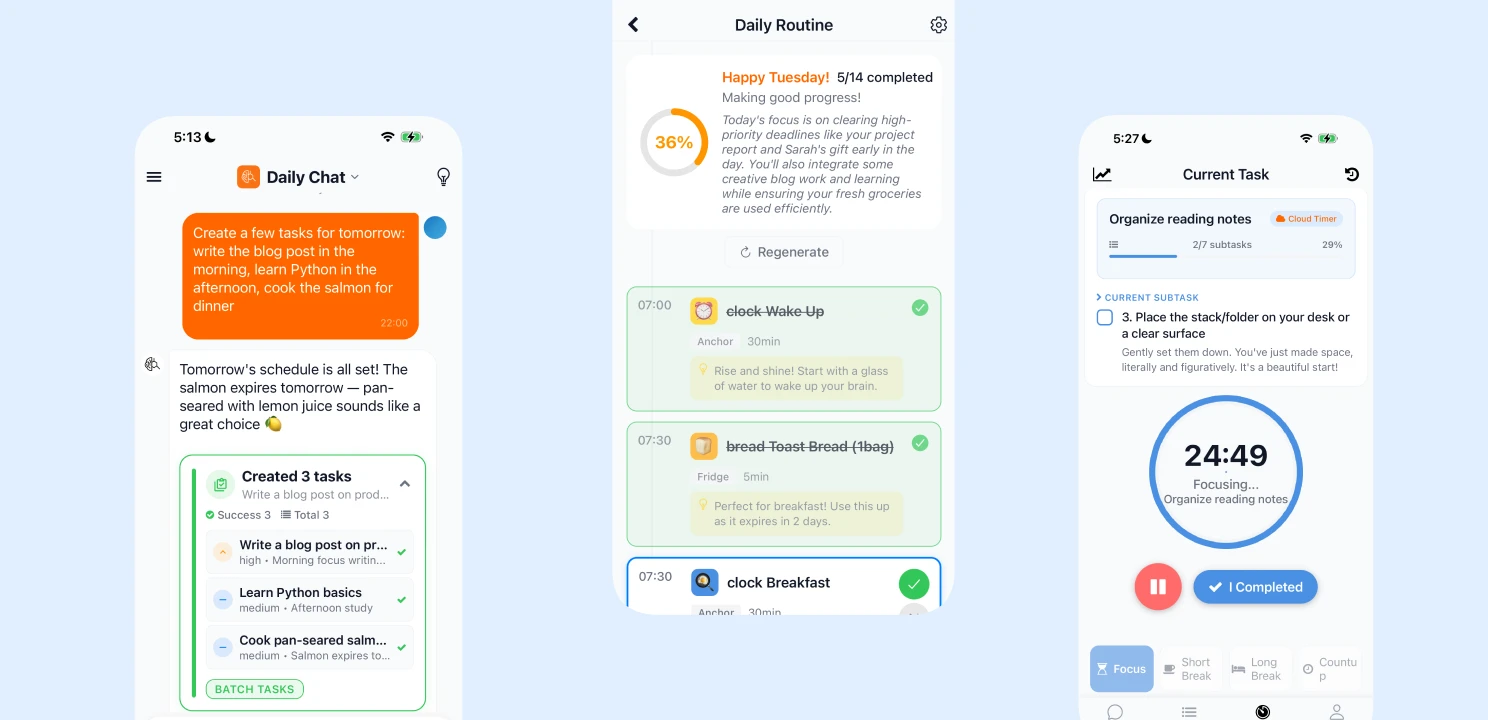
Before bed, I open Dopamind and tell the AI what I need to do tomorrow: "Finish the blog draft, reply to 3 emails, review the App Store screenshots."
The AI breaks these down into smaller steps and prioritizes them. I don't think about it again — tomorrow-morning-me will not have to plan anything, it's already done. There's something genuinely relieving about offloading tomorrow's burden onto tonight. I sleep a little easier every time I do it.
That's Principle 3. The thinking is done. Morning-me only has to execute.
Waking up (the startup period)
I don't look at my task list. I don't open any work apps. I make coffee. I put on music. I let my brain boot up on its own schedule.
I used to feel guilty about this slow start — like I was already falling behind while everyone else was being productive. Now I know this ramp-up time isn't optional. It's required. The coffee and music are the fuel my brain needs to shift out of park.
Sitting down (1 minute)
Once I'm at my desk, I open Dopamind. Today's Routine is already laid out — the AI generated a timeline from what I told it last night, and the first step is right there waiting for me.
No need to think about "what should I do first." I just look and I know.
That's Principle 1. I'm not being asked to "write a blog post." I'm being asked to "open the draft and read one paragraph." I can do that. And the progress ring sitting at 0% doesn't stress me out — I know once I finish the first item, it'll start moving.
Almost every time, reading that paragraph turns into writing the next one. The hardest part is always starting. Once the engine turns over, it tends to keep running on its own.
Focusing, then getting stuck
I tap the task in my Routine and enter Focus Mode. The timer starts, particles drift across the screen, the world goes quiet. These are my favorite minutes of the day — nothing to think about, just the one thing in front of me.
But it doesn't last. Twenty minutes in, I've written two sentences and I'm stuck. I tap "I'm Stuck," and it takes me to the AI chat.
The AI doesn't say "you got this!" It gives me a concrete suggestion: "Skip the intro. Write the section you're most excited about. We'll rearrange later." This feeling of being helped without being judged — of someone just quietly pointing you to the next step instead of cheerleading — honestly, it works better than most advice I've gotten from real people.
Most productivity tools can't do this. They tell you what to do, but when you're stuck, they just stare back at you with an unchecked box. They don't know the difference between "I need a break" and "I need a different angle."
Your morning needs a system that understands how your brain starts — slowly, reluctantly, and in need of a gentle push. Not a drill sergeant.
Your brain isn't broken. It just needs a different launchpad.
Every morning routine you've tried and failed wasn't a bad routine. It was a routine designed for a brain with plenty of dopamine, fast executive function, and smooth transitions between states. A brain that can hear "wake up at 5am and journal" and just... do it.
That's not your brain. And that's fine.
Understanding how your brain works isn't making excuses — it's the first step to finding the right tools. You wouldn't install Windows software on a Mac and blame the Mac when it crashes. You'd get the right software. Same principle.
If anything in this post made you think "wait, that's me" — consider exploring whether your brain runs on a different operating system. Talk to a professional if you can. And in the meantime, build a morning that works with your wiring, not against it.
I built Dopamind for exactly this — an AI assistant designed for brains that need a gentler start. Try it free →
Tomorrow morning, don't set 7 alarms. Just set one, and let something else handle the rest.
Related Reading
- How to Be Productive Working From Home – 12 tactics for easily distracted brains struggling with WFH paralysis.
- ADHD Paralysis: 8 Ways to Break Free – Understand the 3 types of paralysis and proven strategies to get unstuck.
Ready to build a morning that works with your brain?
Stop fighting your wiring. Dopamind is an AI assistant designed for brains that need a gentler start.
Try Dopamind for Free